Real systems, still running, with the screens.

Anyone can show a mockup. These are systems we built for real businesses, and we still host them, fix them and change them every month. A hospice supplier taking orders. A lab watching its freezers at night. An agency turning faxes into referrals.

Home health

Intake, coding and calls for home health agencies

The referral comes in by fax, and someone types it in.

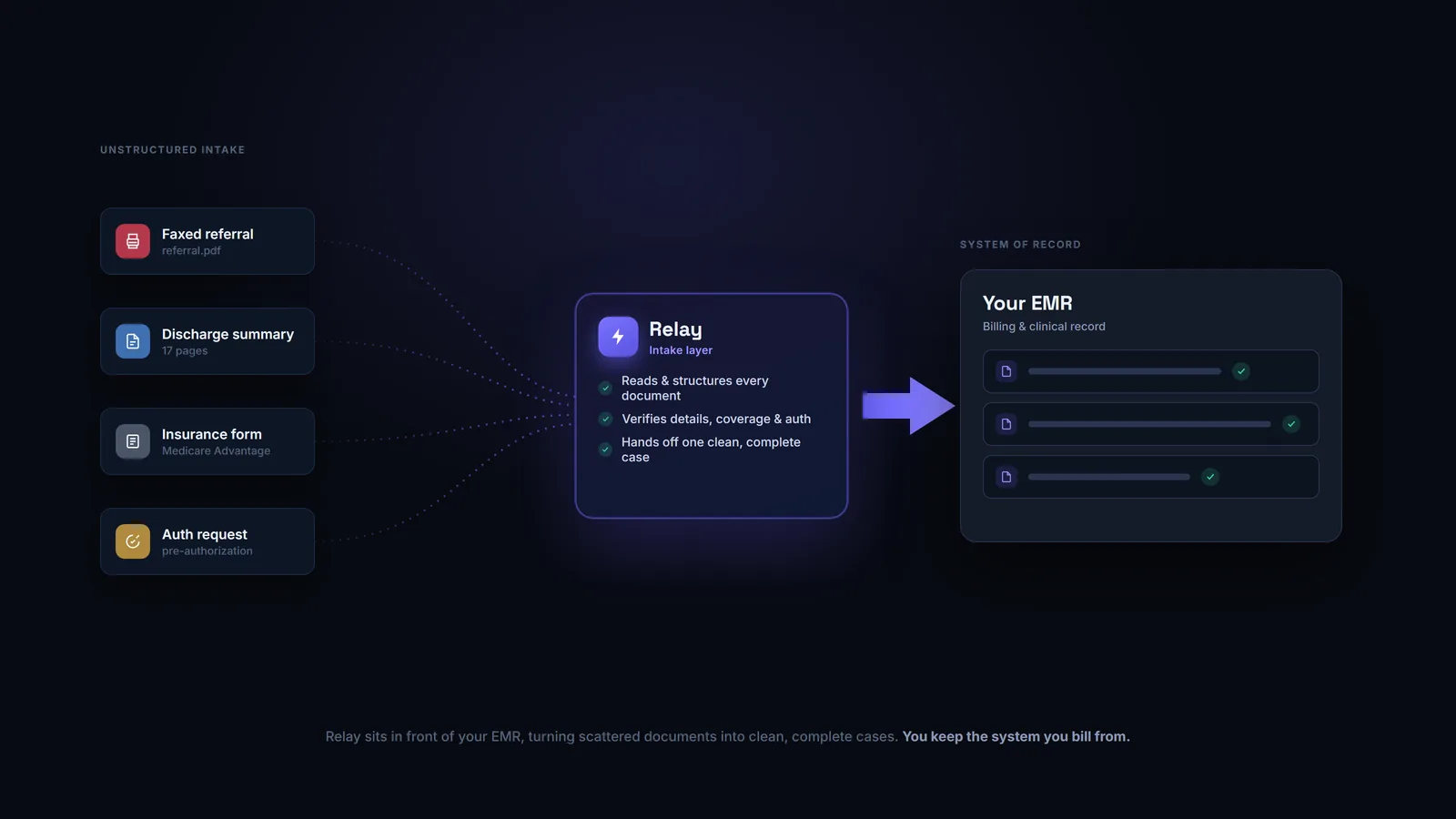
Five systems for the work before and around the chart. Relay turns a faxed referral into a structured one the moment it lands. HH Coding suggests ICD-10 codes and cites the page each came from. George answers the phone. Sealeo gets consents signed. Synergy runs HR for the agency’s staff. It all sits in front of the EMR the agency already bills from.

  • 5 systems we built and still run for home health
  • 3 agencies on Relay, each seeing only its own data
  • A 44-page consent packet, signed at the patient’s home
See the home health systems

Diagram: faxed referrals, discharge summaries, insurance forms and authorization requests flow into Relay, which hands one complete case to the agency's EMR.

Relay: faxes and forms go in, one complete case goes to the EMR. Demo screen.
Hospice supply

Supply ordering for a supplier serving hospices

The old ordering system was broken, and hospices still needed supplies every day.

We replaced Summit DME’s ordering system. Hospices order online from their own approved product list, for a named patient, at the delivery speed they pick. The supplier sees every open order on one board, prints pick sheets, assigns couriers and invoices. The old system kept taking orders during the move.

  • 21 hospice accounts live on the new system
  • 7,900+ past orders moved over
  • About 27 orders a day handled during the move, with 2 copy passes so none was lost

See the supply ordering system

The supplier’s open-orders board, flagged when an order runs past its promise. A drawing.

Construction and production

Work orders, estimates and invoices without the retyping

The same job gets typed into a form, a spreadsheet and an invoice.

For Jexpo Construction, crews fill one on-screen job packet for a national retailer, and the app writes it into the retailer’s real Excel template, prints a matching PDF, and emails it with the PO number. For Chedar, we rebuilt a production budgeting platform: estimates, purchase orders, supplier bills and client invoices in one simpler system.

  • 94 priced line items across 7 trade sheets, filled on one screen
  • Supplier invoices read automatically, and a person approves each one

See the process automation work

Jexpo’s job packet: one screen for the crew, the retailer’s template on the way out. A drawing.

Remodeling contractors

A CRM that runs the job, first call to final invoice

The job lives in five places, and the homeowner keeps calling.

We built CRS a CRM for its remodeling jobs: leads, projects, permits, crew tasks, daily logs with photos, change orders and invoices. Homeowners get a portal where they follow their own project, approve a change order with the price in front of them, and message the contractor instead of calling.

  • Change orders approved on screen, with the price shown
  • Invoices and job expenses with a log of who changed what

See the contractor CRM

A CRS project: phases, open tasks, the latest daily log and a change order waiting on the homeowner. A drawing.

Clinical labs

Reagent lots and freezer temperatures in one system

Expiry dates checked by eye. Temperatures on a clipboard.

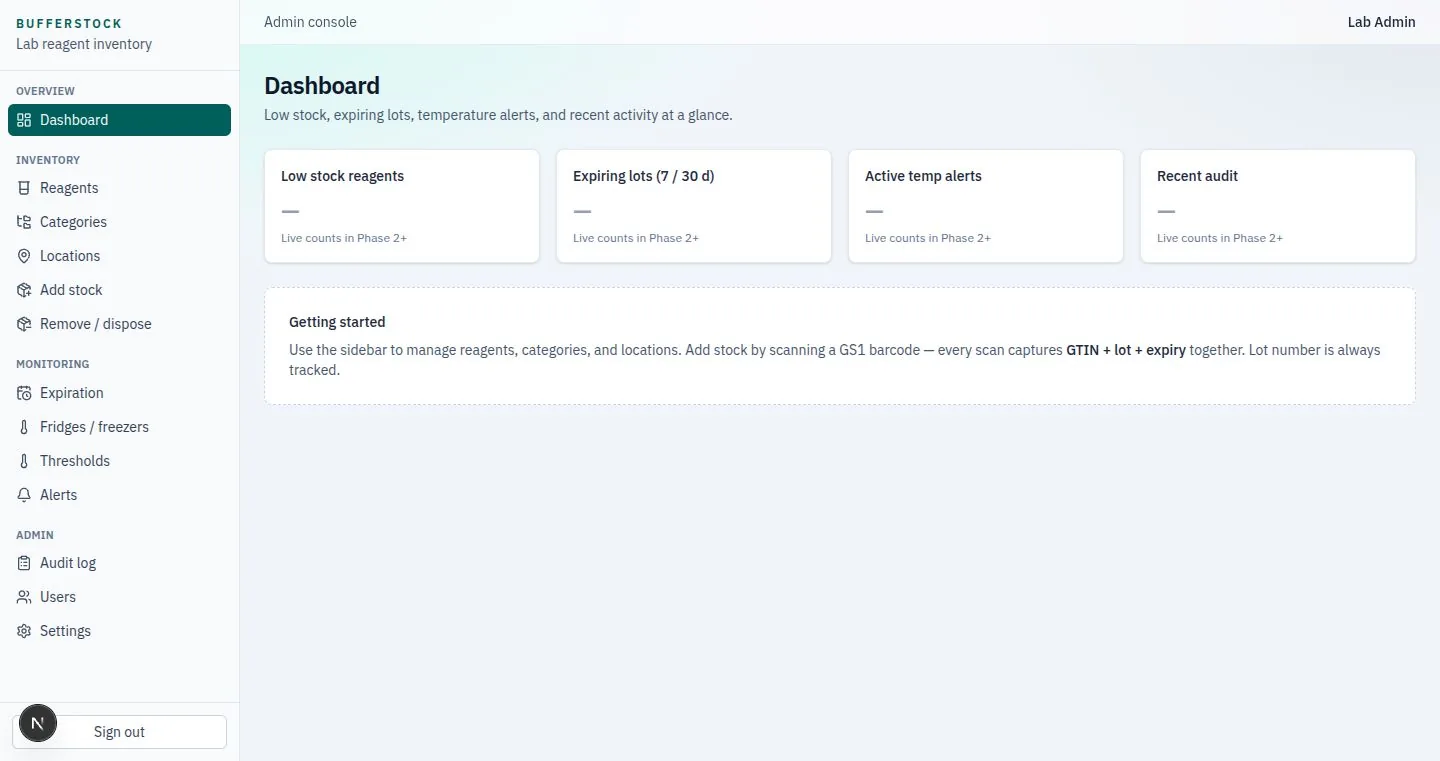
Bufferstock replaced a clinical lab’s shared spreadsheet. One barcode scan reads the product, lot and expiry date. Techs check boxes out at a badge kiosk, and the kiosk refuses an expired lot unless an admin overrides with a PIN and a reason. Wireless sensors watch every fridge and freezer.

  • 250 reagents set up from the lab’s own records
  • 177 stock lots carried over with lot numbers and expiry dates
  • 13 sensors, with an alert after 20 minutes out of range

See the lab inventory system

Bufferstock dashboard: low stock reagents, expiring lots, active temperature alerts, and recent audit activity.

Bufferstock dashboard: low stock, expiring lots, temperature alerts and recent changes.

Private AI

AI that runs on a server you own

Your files are full of things nobody should paste into a public chatbot.

We set up AI on hardware you own. Your staff get a ChatGPT-style screen with their own logins and can ask questions about your own files. Prompts and documents stay on your network. You get a written plan with the machine to buy and our prices before you spend anything.

  • Running in under a week once the machine is in your office
  • One setup fee, then one monthly rate for updates, backups and support

See private AI

The chat screen your staff use, answering from your own files. A drawing.

The home health screens are demos with made-up patients and numbers. Drawings show the shape of a screen, not real data.

No deposit. No build invoice.

Projects like these usually get quoted at $8,000 to $40,000. We don’t ask you for that. The build goes into one flat monthly rate, locked for 48 months, with hosting, backups, maintenance and development hours included. Private AI works differently: one setup fee, then a monthly rate.

$500 to $2,000

a month for most systems

Tell us what’s broken

Don’t see your trade?

Most of these started as a spreadsheet, a fax tray or a tool that fit 80 percent of the work. The trade changes. The mess usually doesn’t.

If an off-the-shelf tool already does what you need at a fair price, keep it. We’ll tell you so, even if that means we lose the work. If you’re running the business on a shared file, start with replacing spreadsheets or see every tool we replace.

Show us what’s breaking.

Tell us which part of the work keeps going wrong. One of us will reply, and we’ll say honestly whether we’re the right fit.

Tell us what's broken